


You get the lowest crypto, gold, and oil spreads at Exness

Every trader knows that a wider spread means your position has to work harder just to break even. Naturally, we wanted to see how well our pricing holds up against the broader market on some of the assets our clients trade most.
To find out, we ran a pricing comparison focusing on assets like crypto, oil, gold, and silver. The results show that Exness Pro accounts consistently deliver significantly tighter spreads than the industry average across these key markets.
Exness spreads across five popular markets
Here’s how Exness Pro account spreads compare to the industry across crypto, energy, and metal CFDs:
Instrument | Exness Pro account spreads |
BTCUSD | 77% lower than the industry average1 |
ETHUSD | 70% lower than the industry average2 |
USOIL | 71% lower than the industry average3 |
XAUUSD | 49% lower than the industry average4 |
XAGUSD | 56% lower than the industry average5 |
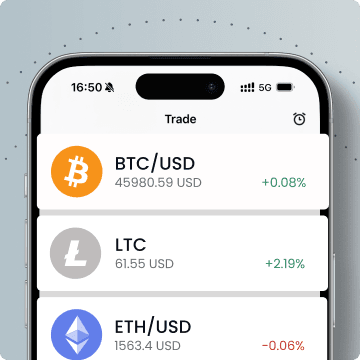
Tap into crypto trading
Go long or short on bitcoin, ethereum, and other cryptos with better-than-market conditions.
Bitcoin (BTCUSD) spreads at Exness
Bitcoin had the widest gap in the comparison, with average BTCUSD spreads on the Pro account coming in at 77% lower than the industry average.
BTCUSD trades around the clock except for short maintenance periods, and is notorious for weekend volatility and sudden momentum shifts. When reacting to a sharp price swing, a tight, predictable spread ensures your position covers less distance to reach profitability.
Of course, crypto liquidity can also change through the day and over the weekend. So the live spread may be wider or tighter than the average shown in our research. You can check live pricing and conditions on our BTCUSD page.
Ethereum (ETHUSD) spreads at Exness
Similar to bitcoin, ethereum demands high execution efficiency, especially for day traders and scalpers running high-frequency setups.
Based on the latest comparisons, Exness has the tightest ETHUSD spreads on the market, 70% lower than the industry average. Tight crypto spreads lets you execute short-term strategies without overpaying on every entry.
Current pricing and contract details are available on our ETHUSD page.
US oil (USOIL) spreads at Exness
For USOIL, our average Pro account spreads were 71% lower than the industry average.
Oil often sees its biggest moves around inventory reports, OPEC and OPEC+ announcements, supply changes, and wider economic news. A setup may only make sense within a fairly narrow price range around these events, which makes the entry cost more relevant.
A wider spread means the price has further to move before the position covers that initial cost. If the trade is built around a relatively short move, that difference takes up a larger part of the target. Lower spreads leave more room for the trade itself.
Check the live USOIL price if you’re trading around an oil market event.

Gold (XAUUSD) spreads at Exness
Transaction costs can be a primary concern for active gold traders, but execution quality is just as critical. Alongside spreads sitting 49% below the industry average, recent research has shown that we also deliver the most precise execution on gold in the industry.6
Gold liquidity fluctuates throughout the trading day, typically peaking during the London and New York session overlap. During these high-volume windows, order books deepen significantly, allowing large volume trades to clear with minimal market impact or price slippage. Trading during peak liquidity ensures you get the full benefit of lower transaction costs, as spreads tend to be at their tightest when market participation is highest.
For active gold strategies—such as intraday scalping or news-breakout trading—the combination of tight spreads and reliable execution can directly improve performance. Lower transaction costs reduce break-even thresholds on every trade, meaning price needs to move less in your favor before you hit net profitability.
Review our current gold pricing and conditions on our XAUUSD page.

Looking to trade gold?
Start strong with tight spreads.
Silver (XAGUSD) spreads at Exness
Silver often takes a back seat to gold in mainstream financial news, but day traders know it for its higher percentage volatility. That wider trading range presents opportunities, provided your trading costs don't cancel them out.
To support active metals traders, Exness maintains the tightest XAGUSD spreads in the market, sitting 56% below the industry average. This ensures you can trade silver's rapid price fluctuations cleanly.
Check our XAGUSD page for live silver pricing.
Why lower spreads matter for volatile instruments
It is easy to focus on the percentages, but the real-world impact of a tighter spread comes down to break-even distance and cost control.
When you trade highly volatile instruments, the market can gap or swing in seconds. A narrow spread means you pay less to execute the trade, reducing the distance the asset needs to move in your favor before you see a return. This is crucial when trading around news events or outside standard market sessions, where costs typically rise. By keeping the spread exceptionally low, you retain better control over your overhead.
How to check and trade these assets with Exness
Before opening a position, it helps to look at the current spread together with all the details of the trade. You can do this directly in your trading platform, while our instrument pages and trading calculator provide more context before you place the order.
- Choose the market you want to trade. Select BTCUSD, ETHUSD, USOIL, XAGUSD, or XAUUSD in your trading platform. You can also check the relevant instrument page first for trading hours, contract specifications, and indicative pricing.
- Check the live spread. Look at the current bid and ask prices on the platform. The difference between them is the spread available at that moment, and may be different from an earlier quote or historical average.
- Work out your position size and costs. Use our Trading calculator to estimate margin, spread cost, commission where applicable, swaps, and pip value based on the account, instrument, volume, and leverage you plan to use.
- Set up the order. Choose your position size and whether you want to enter at the current market price or use a pending order. You can also set a stop loss and take profit before opening the position, or add them later.
- Choose to buy or sell. Once you have checked the price, size, and risk settings, choose the trade direction and confirm the order. You can then monitor or manage the position from your open trades.
If you want to explore our platform or watch how spreads change across different market conditions before using real funds, an Exness demo account lets you practice risk-free.

How to manage spread costs at Exness
Beyond choosing a low-cost account, a few strategic habits can help you manage your trading expenses effectively:
- Target high liquidity windows: Spreads naturally tighten when market participation is highest. For assets like oil and gold, executing trades during overlapping global sessions generally provides the most efficient pricing.
- Calculate costs upfront: Use our Trading calculator to determine the exact margin requirements and pip values for your setup before placing an order.
- Focus on highly-traded currency pairs: In addition to crypto and commodities, major forex pairs offer deep liquidity and some of the narrowest spreads available, making them a staple for cost-conscious risk management.
Frequently asked questions
How do Exness spreads compare to the industry average?
In our research, average Pro account spreads were lower than the industry average across all five instruments measured: 77% lower on BTCUSD, 70% lower on ETHUSD, 71% lower on USOIL, 56% lower on XAGUSD, and 49% lower on XAUUSD.
These results apply to the specific account and periods. Our live spreads continue to change with market conditions.
Do Exness spreads ever widen?
Yes. Spreads change depending on the market conditions, and can widen when volatility rises or liquidity falls. This may happen around major news, during quieter trading periods, or when the market moves sharply.
Check the live bid and ask prices in your trading platform before placing an order.
Which Exness account has the tightest spreads?
The lower-cost option depends on the instrument, position size, and way you trade, so it’s worth comparing the total cost rather than starting with the spread alone.
For example, our Raw Spread and Zero accounts can offer lower starting spreads than Pro, although both use a commission-based pricing structure. Our Pro accounts are designed specifically for professional and high-volume traders, offering zero commission on most instruments and highly competitive pricing.
Are lower spreads better for trading?
A lower spread reduces the cost of opening a position and the amount of price movement needed to cover that cost.
The difference tends to matter more if you trade frequently, enter through several orders, or use a strategy with relatively small price targets. It does not reduce market risk or change the quality of a trading setup.
This article does not constitute investment advice. Past performance is not indicative of future results. The information, data, prices, and market conditions presented in this article are accurate as of the publication date and may change over time. Your capital is at risk. Please trade responsibly.
- Exness Pro account spreads were 77% lower than the average spreads of 18 other brokers on BTCUSD, in the week of 8-14 June 2026, comparing tightest spread-only accounts.
- Exness Pro account spreads were 70% lower than the average spreads of 18 other brokers on ETHUSD, in the week of 8-14 June 2026, comparing tightest spread-only accounts.
- Exness Pro account spreads were 71% lower than the average spreads of 18 other brokers on USOIL, in the week of 8-14 June 2026, comparing tightest spread-only accounts.
- Exness Pro account spreads are 49% lower than the average spreads of 21 other brokers on XAUUSD, in the week of 28 June - 03 July 2026, comparing tightest spread-only accounts.
- Exness Pro account spreads are 56% lower than the average spreads of 18 other brokers on XAGUSD, in the week of 8-14 June 2026, comparing tightest spread-only accounts.
- Most precise execution claims refers to average slippage on XAUUSD pending orders from 17–31 August 2026, comparing Exness Standard with similar accounts from seven other brokers. Delays and slippage may occur. Execution speed and precision are not guaranteed.